
Plastic Picking Basket or Bamboo Picking Basket? Experience Choosing Picking Baskets for Harvest Season
📅 Aug 25, 2026
👁 0 views
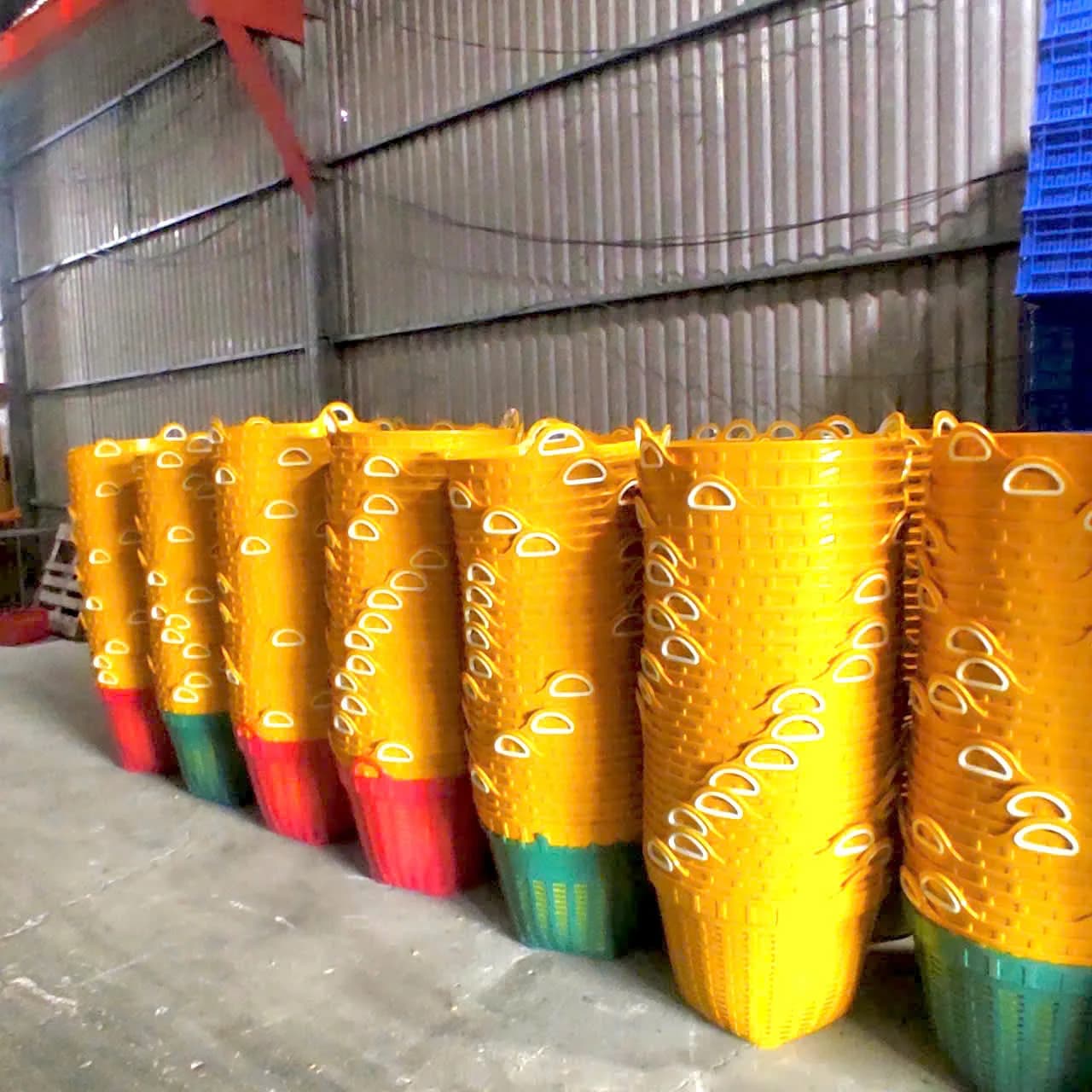
Every harvest season, the most common question that fruit wholesalers and cooperatives ask is not "where to buy picking baskets," but "should we continue using bamboo picking baskets or switch to plastic picking baskets?" The answer varies for each orchard — it depends on the type of produce, frequency of use, and post-harvest storage methods.
This article analyzes the specific differences between the two types, how to choose the right size for each product, and common mistakes that cause many units to spend money repurchasing every year.
1. What is a plastic picking basket?
A plastic picking basket is a large-capacity container with a ventilated woven body, round bottom, and two handles at the rim. This design mimics the traditional bamboo picking basket but is manufactured by injection molding from virgin plastic pellets.
The difference lies in the body: plastic strips are woven into an even mesh, creating gaps for air circulation around the produce. This allows heat generated from fruit respiration to escape instead of being trapped inside the basket — a key factor determining whether the fruit will sweat and overripen during transport.
Plastic picking baskets at Minh Quân Plastic are made from HDPE plastic, a type of plastic with high toughness, good impact resistance, and no brittleness when exposed to sudden temperature changes.
2. Comparison between plastic picking baskets and bamboo picking baskets
Bamboo picking baskets have long been associated with Vietnamese agriculture and still hold a place. However, when weighed against current commercial usage needs, the differences are quite clear.
CriteriaPlastic Picking Basket HDPEBamboo Picking BasketDurabilityMultiple seasons, does not rotUsually 1–2 seasons, gradually rots when dampHygieneCan be rinsed with water, dries quicklyHard to clean thoroughly, moisture easily trapped in stripsMold and termitesNoneHigh risk when stored over seasonsBroken strips causing fruit scratchesNoBamboo strips crack creating sharp splintersEmpty weightLight, uniformHeavier when waterloggedStacking for storageFits tightly, space-savingBulky, difficult to stack neatlyInitial costHigherLowerCost per seasonLower due to longer useHigher due to frequent replacement
Key point: bamboo picking baskets are cheaper to buy but more expensive when calculated per season of use. If used for only one season then discarded, bamboo is reasonable. If purchasing year-round or needing multiple reuse seasons, plastic picking baskets recover costs faster.
Another often overlooked factor: food safety. Bamboo strips that absorb water and are not dried properly develop mold — this becomes a barrier when products need to enter supermarket chains or export markets, where produce-contact equipment inspection is required.
3. Three sizes of plastic picking baskets and suitable products
Minh Quân Plastic offers three sizes of woven plastic picking baskets, all made from HDPE and featuring the same two-handle woven body design:
Small woven plastic picking basket — 60.7 × Ø55 × 48 cm
The small size is suitable for fragile produce or items with high value per kilogram. The moderate capacity helps the bottom layer of fruit avoid excessive pressure from the weight above.
Suitable for: rambutan, longan, lychee, tomato, chili, leafy vegetables.
This size is also the easiest to handle by one person, ideal for the picking stage in the orchard and transporting to collection points.
Medium woven plastic picking basket — 70.2 × Ø67.5 × 54.3 cm
The medium size is the most popular choice as it balances volume and portability. One strong person can carry it when full; two people carry it easily.
Suitable for: orange, tangerine, pomelo, mango, potatoes, various root vegetables.
If unsure which size to choose, medium is usually a safe starting option.
Large woven plastic picking basket — 76.4 × Ø71 × 64.5 cm
The large size is for large quantities with low bruising risk, or when reducing the number of handling cycles per volume is needed.
Suitable for: coconut, pumpkin, cassava, jackfruit, raw agricultural products, agricultural waste.
Note: when fully loaded, the large size requires two people to carry. If the orchard terrain is uneven or paths are narrow, consider medium size to avoid dropping or spillage.
Thick durian weighing plastic crate
Besides the three sizes above, the thick durian weighing plastic crate is specially designed for weighing and transferring durian — a spiky, heavy fruit per piece that requires higher basket wall durability than usual.
4. How to choose a plastic picking basket: four questions to answer
Instead of choosing by intuition, answer these four questions in order:
One — How heavy is the produce per load? Estimate the actual weight each time it is filled. Heavy and dense fruits like coconut or pumpkin exert much more pressure on the basket walls than leafy vegetables of the same volume.
Two — How many people carry one picking basket? This factor is often overlooked. Buying a large size to reduce quantity, but if labor requires two people to carry each basket, total harvest time may increase.
Three — Is the fruit easily bruised? Soft produce should use small size or only fill 2/3 of a medium basket. The higher the stacked layers, the more pressure on the bottom layer.
Four — Where is it stored after the season? Plastic picking baskets nest tightly inside each other, saving significant warehouse space. If storage is limited, this is a clear advantage over bamboo baskets.
5. Why choose HDPE instead of cheap recycled plastic
There are low-cost plastic picking baskets on the market made from mixed recycled plastic. The initial price difference is attractive, but differences appear after a few months of use:
Brittle and cracked after prolonged sun exposure or strong impact, especially at handles and rim edges — the two highest stress points
Fades quickly, losing aesthetic appeal when delivering to partners
Unpleasant odor from impurities in the plastic, causing concerns when in contact with food
Deforms when stacked multiple layers in storage
Virgin HDPE plastic maintains flexibility over time, does not become brittle with temperature changes, and does not emit odors. For multi-season use, the initial price difference is recovered after one to two seasons.
6. Tips for long-lasting plastic picking baskets
Wash immediately after each season. Resin, fruit sap, and soil that accumulate over time are harder to clean. Rinse with pressurized water and dry completely before storage.
Do not drag on concrete floors. The basket bottom wears down gradually, becoming thin and prone to holes. Lift when moving or use a cart for long distances.
Do not stack too high during transport. Plastic picking baskets have good load capacity, but when the vehicle moves on rough roads, the force on the bottom layers is much greater than when stationary.
Use colors for sorting. Plastic picking baskets come in many colors — blue, red, green, yellow, white, and wood grain. Assigning each color to a product type, quality grade, or production stage significantly reduces confusion during peak harvest. This is an advantage bamboo baskets do not have.
Avoid prolonged exposure to harsh sunlight year-round. Although HDPE is more UV resistant than many other plastics, storing under cover significantly extends lifespan.
7. What to prepare before requesting a quote
To receive a quick and accurate quote, prepare four pieces of information:
Picking basket size — small, medium, or large (or describe the produce type if unsure)
Estimated quantity — picking baskets are packed 5 pieces per bundle
Color — single color or multiple colors for sorting
Delivery location — to calculate delivery time
For large orders or pre-season bookings, contact early as peak harvest often has many simultaneous orders.
Conclusion
Bamboo picking baskets remain suitable for short-term use and limited budgets. But if purchasing year-round, requiring multiple reuse seasons, or supplying distribution channels with hygiene requirements, HDPE plastic picking baskets are a more cost-effective choice overall.
The most important is selecting the right size for the right produce — a picking basket too large for fragile fruit or too small for coarse products reduces the efficiency of the entire harvesting chain.
Minh Quân Plastic supplies three sizes of HDPE plastic picking baskets and thick durian weighing plastic crates, delivering nationwide. Contact us for advice on the right type for your needs and quick quotes.