
How to Choose the Right Plastic Pallet According to Load Capacity and Usage Needs
📅 Jul 14, 2026
👁 63 views
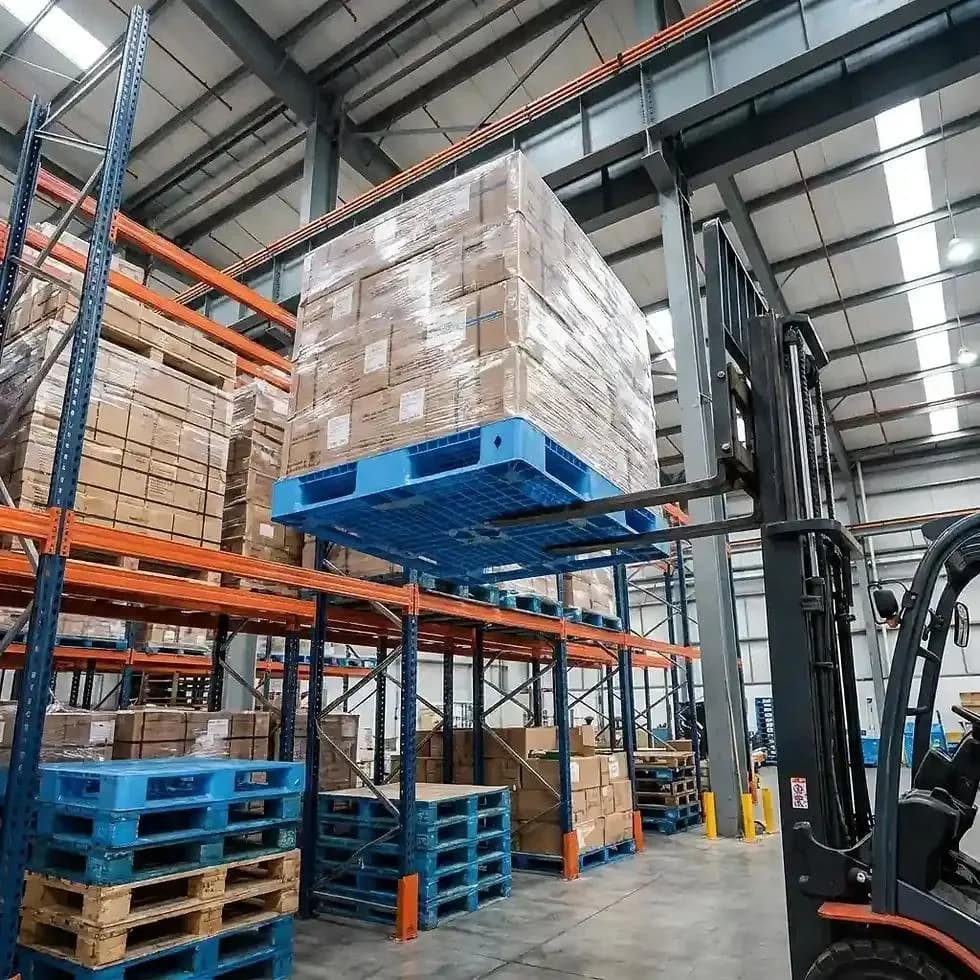
Plastic pallets are commonly used in factories, warehouses, production workshops, and distribution centers for stacking, storing, and circulating goods. However, each type of pallet has different dimensions, structures, materials, and load capacities. Choosing the wrong pallet can increase investment costs, reduce operational efficiency, or affect safety during material handling.
With experience supplying plastic pallets and industrial plastic products to various customer groups, Minh Quân Plastic has observed that many businesses select pallets mainly based on size or price without thoroughly checking load capacity, leg type, lifting equipment, and actual usage conditions.
The following article will help businesses understand important criteria when choosing plastic pallets, enabling them to select products better suited to their goods, warehouses, and investment budgets.
1. Determine the Purpose of Using Plastic Pallets
Before selecting a product, businesses need to identify the intended use of the pallet.
Fixed Stacking in Warehouse
If the pallet is mainly placed fixed on the floor to stack boxes, material bags, or product packages, businesses should focus on static load capacity, surface dimensions, and moisture resistance.
Floor liner pallets or legless pallets may be suitable when frequent lifting and moving are not required.
Material Handling by Forklift
If the pallet is used for transporting goods by hand pallet truck or forklift, it is necessary to choose products with appropriate dynamic load capacity and leg structures compatible with the lifting equipment.
Do not rely solely on static load capacity to assess the pallet’s transport capability.
Storage on Racking Systems
Pallets used on racks must have sufficiently rigid structures, dimensions suitable for the spacing of support beams, and load capacity according to actual stacking methods.
Businesses should confirm whether the pallet fits the rack before use, especially for heavy goods.
Floor Lining in Warehouse and Production Areas
For floor lining needs, pallets with low height, ventilated surfaces, and the ability to connect multiple panels are more convenient. This type helps limit direct contact of goods with water, dust, and moisture from the floor.
Minh Quân Plastic Advises Pallets According to Actual Needs
At Minh Quân Plastic, customers can choose from many plastic pallet lines serving different purposes such as fixed stacking, floor lining, forklift handling, storage, or use in production lines.
The pallet catalog is offered in various sizes, surface types, and leg structures, including:
Instead of choosing only by product name, customers should provide Minh Quân Plastic with information such as goods dimensions, weight per package, type of forklift, stacking method on floor or rack, and usage environment. This information helps ensure consultation is more aligned with actual needs.
2. Distinguish Between Static Load and Dynamic Load
Load capacity is the most important criterion when selecting plastic pallets.
What is Static Load?
Static load is the weight of goods a pallet can support when placed fixed on a flat surface. The goods must be evenly distributed on the pallet surface.
For example, a pallet with a static load of 3,000 kg does not mean it can be lifted or transported with 3,000 kg by forklift.
What is Dynamic Load?
Dynamic load is the weight a pallet can support while being lifted or moved by forklift.
Dynamic load is usually lower than static load because the pallet is subjected to additional forces from lifting, moving, vibrations, and direction changes.
Why Should Load Capacity Not Be Exceeded?
Using pallets beyond their load capacity can cause:
Warping or deformation of the pallet surface.
Cracking of legs and load-bearing ribs.
Unbalanced goods during transport.
Increased risk of falling or accidents in the warehouse.
Reduced pallet lifespan.
Businesses should select pallets with load capacities higher than actual goods weight to create a safety margin.
3. Choose Pallet Size According to Goods and Warehouse Space
Pallet size must suit the goods, racking system, and transport vehicles.
Some common sizes include:
1000 x 600 mm.
1100 x 1100 mm.
1200 x 800 mm.
1200 x 1000 mm.
1200 x 1200 mm.
Before choosing, businesses should measure:
Base dimensions of the goods package.
Warehouse aisle width.
Distance between rack beams.
Truck or container bed dimensions.
Type of forklift in use.
Too small pallets may cause goods to protrude. Too large pallets occupy excessive space and reduce warehouse layout efficiency.
4. Select Pallet Design
Mesh Surface Pallets
Mesh surface pallets have many ventilation slots, reducing weight, allowing quick drainage, and facilitating cleaning.
This type is suitable for:
Cold storage.
Food warehouses.
Manufacturing plants.
Areas frequently exposed to water.
General goods circulation needs.
Solid Surface Pallets
Solid surface pallets have a closed surface, suitable for goods with small bases, bagged materials, or supplies requiring a relatively flat support surface.
The closed design also helps limit dust or liquid penetration through the surface.
Cup-Leg Pallets
Cup-leg pallets have multiple support points underneath, are usually compact in weight, and convenient for stacking or moving goods.
Compatibility with forklifts should be checked before use.
Cross-Bottom Pallets
The cross-bottom design enhances connections on the underside and supports load distribution. This line suits many storage and internal transport needs.
Legless Floor Liner Pallets
Legless pallets have low height, mainly used for fixed stacking or floor lining. This type should not be assumed suitable for lifting and transporting without technical confirmation.
5. Choose Pallet Material According to Usage Needs
At Minh Quân Plastic, pallets can be classified by material as follows:
Type 1 Pallets: Virgin Green Plastic
Type 1 pallets are made from virgin green plastic, with uniform color and suitable for environments requiring high standards of appearance, cleanliness, and material quality.
Type 2 Pallets: Recycled Green Plastic
Type 2 pallets are made from recycled green plastic, suitable for warehouse use and balancing investment costs.
Type 3 Pallets: Recycled Black Plastic
Type 3 pallets are made from recycled black plastic, typically suitable for stacking, floor lining, or internal use with reasonable cost.
Plastic Pallet Lines Provided by Minh Quân Plastic
To facilitate customer selection, Minh Quân Plastic classifies pallets by material and color as follows:
Type 1 Pallets: virgin green plastic.
This product line suits customers prioritizing virgin material, uniform color, and environments with higher requirements for appearance or cleanliness.
Type 2 Pallets: recycled green plastic.
This is a choice that balances functionality and investment cost, suitable for many warehouses, factories, and workshops.
Type 3 Pallets: recycled black plastic.
This line is often chosen for stacking, floor lining, or internal use with reasonable cost.
Besides material, each pallet model has different load capacity specifications and structures. Therefore, customers should not rely solely on color to determine load capacity.
6. Check Compatibility with Forklifts
Before purchasing pallets, check:
Whether using hand pallet trucks or forklifts.
Fork height.
Fork insertion direction.
Distance between pallet legs.
Weight of goods during lifting.
Floor conditions and travel paths.
Some pallets may be suitable for forklifts but inconvenient for hand pallet trucks, or vice versa.
7. Common Mistakes When Choosing Plastic Pallets
Businesses should avoid the following errors:
Focusing only on price without checking load capacity.
Confusing static load with dynamic load.
Choosing sizes incompatible with racks.
Not checking the type of forklift used.
Concentrating load at a single point.
Using floor liner pallets for lifting and transporting goods.
Not clearly identifying virgin or recycled material.
Selecting pallets that are too light for heavy goods.
8. Experience to Optimize Costs
To optimize costs, businesses should:
Record actual goods weight.
Group stacking and transport needs.
Choose the correct load capacity instead of the largest.
Use color coding to classify areas.
Inspect pallets regularly.
Avoid dragging pallets on rough floors.
Clean and maintain properly.
Purchase quantities suitable for operational plans.
Conclusion
To select suitable plastic pallets, businesses need to consider load capacity, size, material, surface type, leg design, lifting equipment, and usage environment simultaneously. A suitable product not only ensures safe stacking and storage of goods but also helps optimize warehouse space, loading time, and operating costs.
Minh Quân Plastic specializes in supplying plastic pallets, plastic crates, plastic bins, and many industrial plastic products serving factories, warehouses, production facilities, and distribution centers. The pallet catalog is diverse in size, design, material, and load capacity, suitable for various stacking, floor lining, and goods circulation needs.
Customers can provide information about goods weight, package dimensions, forklift type, and usage method to receive better pallet model consultation from Minh Quân Plastic.
Customers needing to order large quantities or request quotations can contact Minh Quân Plastic for detailed consultation.