
Open Plastic Crates and Closed Plastic Crates: Features, Applications, and Selection Guide
📅 Jul 14, 2026
👁 60 views
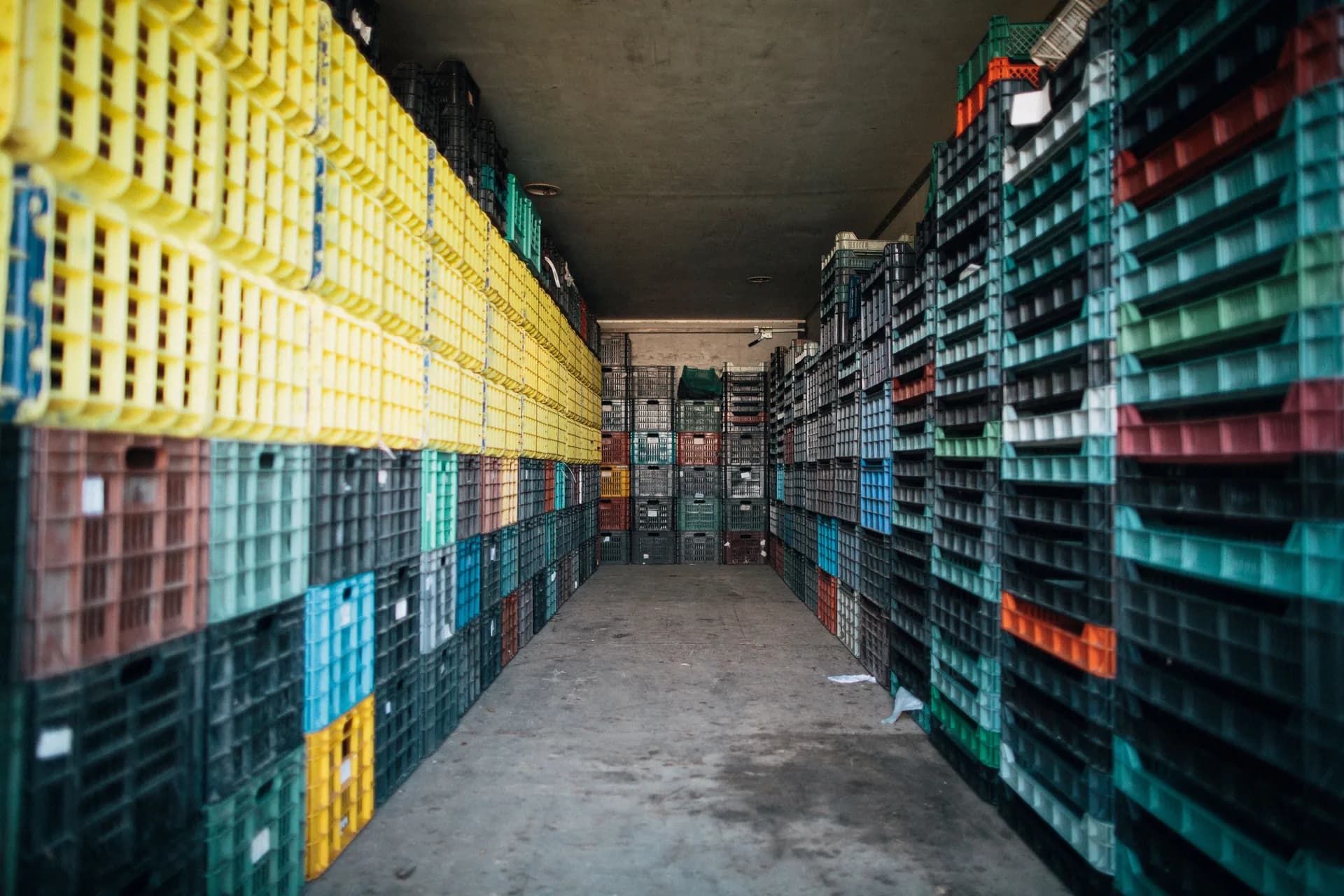
Plastic crates are widely used containers in factories, warehouses, agricultural processing facilities, the garment, electronics, and logistics industries. The two most common types are open plastic crates and closed plastic crates.
Each type has its own design and function. Understanding their differences helps businesses select the right product, better protect goods, and optimize storage and transportation processes.
1. What is an open plastic crate?
Open plastic crates have sides and bottoms designed as grids with many ventilation slots.
This structure helps:
Air circulate around the goods.
Water drain quickly after cleaning.
Easy observation of the contents.
Reduce product weight.
Suitable for goods requiring ventilation.
Applications of open plastic crates
Open crates are commonly used to contain:
Vegetables.
Fruits.
Agricultural products.
Packaged food.
Clothing and fabrics.
Components of sufficiently large size.
Goods requiring drainage.
Products needing quick external inspection.
2. What is a closed plastic crate?
Closed plastic crates have solid sides and bottoms. This design creates a relatively enclosed storage space compared to open crates.
Closed crates can:
Prevent small parts from falling out.
Reduce dust contact with goods.
Keep small materials secure during transport.
Suitable for goods requiring enclosed containers.
Support sorting goods by batch.
Applications of closed plastic crates
Closed crates are suitable for storing:
Electronic components.
Mechanical parts.
Screws and small materials.
Semi-finished products.
Clothing and accessories.
Packaged food.
Consumer goods.
Materials requiring loss prevention.
3. Comparison between open and closed plastic crates
1. Design
Open plastic crates:
Have grid sides and bottoms with many ventilation slots. This design allows good air circulation and quick drainage.
Closed plastic crates:
Have solid sides and bottoms, creating a more enclosed storage space. This design suits small goods or those needing to prevent loss.
2. Ventilation capability
Open plastic crates:
Highly ventilated, suitable for vegetables, fruits, agricultural products, and goods requiring air circulation.
Closed plastic crates:
Lower ventilation but help reduce dust and environmental exposure.
3. Drainage capability
Open plastic crates:
Water drains quickly through slots in sides and bottom, suitable for areas frequently cleaned with water or goods with moisture.
Closed plastic crates:
Solid bottom limits drainage. Cleaning requires thorough washing and drying before reuse.
4. Visibility of goods
Open plastic crates:
Users can observe goods through grid slots, facilitating inspection and sorting.
Closed plastic crates:
Goods inside are less visible but better protected from dust and external factors.
5. Containment of small parts
Open plastic crates:
Not suitable for parts smaller than grid slots due to risk of falling out.
Closed plastic crates:
Suitable for components, parts, screws, small materials, and goods needing loss prevention.
6. Protection of goods
Open plastic crates:
Suitable for ventilated goods but less effective at limiting dust and water exposure.
Closed plastic crates:
Solid sides better protect goods from dust, splashes, and environmental impacts.
7. Product weight
Open plastic crates:
Generally lighter due to grid design of sides and bottom.
Closed plastic crates:
May be heavier due to more material used for solid sides and bottom.
8. Suitable applications
Open plastic crates are suitable for storing:
Vegetables and fruits.
Post-harvest agricultural products.
Packaged food.
Garments and fabrics.
Goods requiring ventilation.
Products needing quick drainage.
Closed plastic crates are suitable for storing:
Electronic components.
Mechanical parts.
Screws and small materials.
Semi-finished products.
Packaged consumer goods.
Goods requiring dust protection or loss prevention.
Summary of selection guidelines
Choose open plastic crates when goods require ventilation, quick drainage, and easy external inspection.
Choose closed plastic crates when goods are small, need dust protection, water resistance, or loss prevention during storage and transport.
4. When to choose open plastic crates?
Businesses should select open plastic crates when:
Goods require air circulation.
Products have moisture content.
Quick drainage is needed.
External observation of goods is desired.
Containing vegetables, fruits, or agricultural products.
Lightweight containers are preferred.
Frequent cleaning with water is performed.
For example, in vegetable processing facilities, open crates allow water to drain quickly after washing. In the garment industry, the grid design helps staff easily identify contents.
5. When to choose closed plastic crates?
Closed plastic crates are suitable when:
Goods are small in size.
Loss prevention is needed.
Reducing dust contact with products is desired.
Containing components or parts.
Sorting goods by code is required.
Materials are transferred between production stages.
Storing packaged goods.
For example, in electronics factories, closed crates help prevent small components from falling out. In mechanical workshops, they are suitable for grouping parts and materials.
6. Selecting the appropriate crate size
Besides open or closed type, businesses need to choose the right size.
Low-profile models like 1T, 1T5, or 1T8 are suitable for:
Components.
Low-height materials.
Goods requiring frequent handling.
Placement on tables or shelves.
Taller models like 2T5, 3T1, 3T9, or 4T5 are suitable for:
Large-volume goods.
High-quantity materials.
Raw materials or finished products.
Batch consolidation needs.
Avoid selecting crates that are too tall if goods are easily compressed or users need frequent access at the bottom.
7. Advantages of HDPE plastic material
Many plastic crate models are made from HDPE plastic with features including:
Appropriate hardness and flexibility.
Minimal moisture impact.
Resistance to pests.
Easy to clean.
Reusable multiple times.
Suitable for factories and warehouses.
Available in multiple colors for sorting.
Actual load capacity depends on size, rib structure, and thickness of each product model.
8. Using colors for inventory management
Plastic crates commonly come in colors such as:
Blue.
Red.
Green.
Yellow.
Businesses can assign:
Red for goods awaiting inspection.
Green for approved goods.
Yellow for raw materials.
Blue for finished products.
Color coding helps staff quickly identify goods and reduce errors during operations.
9. Tips for effective use of plastic crates
Do not overload beyond load capacity.
Do not throw or drop crates from height.
Distribute load evenly.
Inspect edges and bottoms before use.
Clean according to goods type.
Do not stack too high on uneven surfaces.
Use lids or covers if better dust protection is needed.
Choose open or closed crates based on goods characteristics, not just price.
Conclusion
Open plastic crates are suitable for goods requiring ventilation, drainage, and easy inspection. Closed plastic crates suit components, small materials, and goods needing protection from loss or dust.
Businesses should base their choice on goods size, usage environment, cleaning methods, and transport processes. Minh Quân Plastic offers a wide range of open and closed plastic crates in various sizes and colors to meet practical needs.