
Distinguishing Plastic Pallets Type 1, Type 2, and Type 3: Which Should You Choose?
📅 Jul 14, 2026
👁 60 views
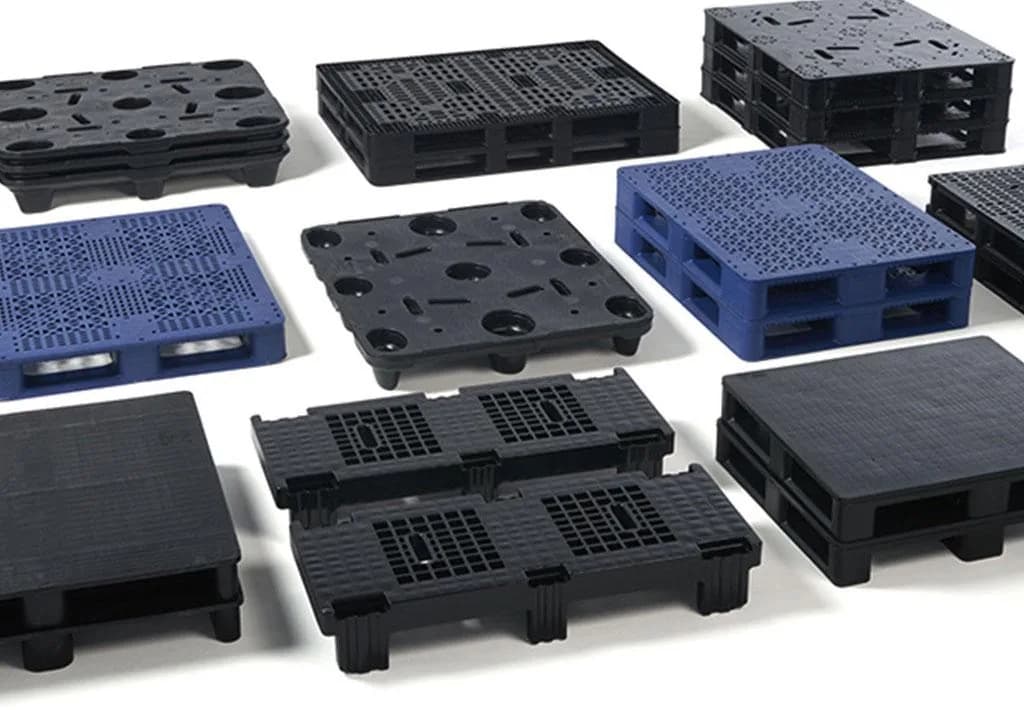
When purchasing plastic pallets, customers often encounter the terms type 1, type 2, and type 3 pallets. However, without clear explanation, buyers may confuse the material, color, and load capacity of each type.
At Minh Quân Plastic, pallets are classified based on raw material source and product color according to a unified convention:
Type 1 pallet: virgin blue plastic.
Type 2 pallet: recycled blue plastic.
Type 3 pallet: recycled black plastic.
This classification helps customers easily select according to usage requirements, working environment, and investment budget. However, material type is not the only factor determining pallet load capacity. Load-bearing ability also depends on size, rib structure, leg style, weight, and design of each product.
1. What is a Type 1 Plastic Pallet?
Type 1 pallets are made from virgin blue plastic. Virgin material has not undergone recycling, resulting in higher uniformity in color and material properties.
Characteristics of Type 1 Pallets
Uniform blue color.
Good aesthetic surface.
Suitable for environments emphasizing hygiene.
Easy to identify and manage in warehouses.
Typically higher cost than recycled types.
Ideal for stable, long-term usage needs.
Suitable Applications
Type 1 pallets are commonly chosen for:
Food warehouses.
Consumer goods manufacturing plants.
Areas requiring uniform product appearance.
Finished goods warehouses.
Businesses needing color management according to internal standards.
Environments requiring frequent cleaning.
2. What is a Type 2 Plastic Pallet?
Type 2 pallets are made from recycled blue plastic. The product retains a blue color for easy identification but uses recycled material to optimize cost.
Characteristics of Type 2 Pallets
Blue color.
Cost suitable for many businesses.
Suitable for warehouses and factories.
Appropriate for stacking or internal circulation needs.
Color may not be as uniform as virgin plastic.
Must be used within the declared load capacity.
Suitable Applications
Type 2 pallets are suitable for:
Raw material warehouses.
Component warehouses.
Manufacturing plants.
Packing areas.
Internal stacking needs.
Businesses balancing cost and usability.
3. What is a Type 3 Plastic Pallet?
Type 3 pallets are made from recycled black plastic. This is usually the economical choice for stacking, floor lining, or use in industrial environments.
Characteristics of Type 3 Pallets
Black color.
Less visible dust or usage marks.
Reasonable investment cost.
Suitable for warehouses and internal use.
Not intended for high requirements on color or appearance.
Load capacity must be selected appropriately for each pallet model.
Suitable Applications
Type 3 pallets are often used for:
Warehouse floor lining.
Stacking raw materials.
Stacking components and supplies.
Use in mechanical workshops.
Dividing storage areas.
Warehouses not requiring virgin plastic.
Minh Quân Plastic Provides Pallets for Each Usage Segment
Minh Quân Plastic offers many pallet models across all three material groups to meet different business needs.
Customers needing pallets for clean warehouses, finished goods areas, or environments emphasizing appearance can consider type 1 pallets. For raw material warehouses, manufacturing plants, or internal circulation needs, type 2 pallets often balance cost and functionality. Meanwhile, type 3 pallets suit many stacking, floor lining, and industrial warehouse uses.
Besides material, Minh Quân Plastic also supplies various structures such as:
Thanks to a diverse product catalog, customers can choose based on material, size, load capacity, and usage purpose rather than price alone.
4. Comparison of Plastic Pallets Type 1, Type 2, and Type 3
Type 1 Plastic Pallets
Material: Virgin blue plastic
Color: Blue
Characteristics: Uniform color, attractive surface, suitable for environments emphasizing hygiene and product appearance.
Cost: Higher than type 2 and type 3.
Suitable applications: Food warehouses, finished goods warehouses, consumer goods manufacturing plants, and areas requiring stable material quality.
Type 2 Plastic Pallets
Material: Recycled blue plastic
Color: Blue
Characteristics: Meets stacking and internal circulation needs well, helps businesses balance investment cost.
Cost: Lower than type 1 and higher than type 3.
Suitable applications: Raw material warehouses, factories, manufacturing plants, packing areas, and general warehouses.
Type 3 Plastic Pallets
Material: Recycled black plastic
Color: Black
Characteristics: Reasonable cost, less visible dust, suitable for internal use.
Cost: Most economical among the three.
Suitable applications: Stacking, floor lining, industrial warehouses, mechanical workshops, and areas with low color or appearance requirements.
Summary of Selection
Choose type 1 pallets when the business prioritizes virgin plastic, uniform color, and a clean usage environment.
Choose type 2 pallets when balancing cost and usability while still wanting blue pallets for easy warehouse management.
Choose type 3 pallets when prioritizing cost, using for stacking, floor lining, or internal warehouse operations.
5. Which type should you choose?
Choose type 1 when
The business prioritizes virgin plastic.
Uniform color is required.
Used in environments requiring high cleanliness.
Want to build a standardized pallet system.
Accept higher investment.
Choose type 2 when
Blue color is needed for easy management.
Want to balance cost and functionality.
Used in factories or general warehouses.
Virgin plastic is not mandatory.
Choose type 3 when
Cost is a priority.
Use pallets for stacking or floor lining.
Used in industrial warehouses.
Color requirements are not strict.
Need large quantities for internal operations.
6. Do Not Choose Based on Color Alone
Color helps identify material type but cannot replace checking technical specifications.
When selecting pallets, customers should still consider:
Dimensions.
Static load capacity.
Dynamic load capacity.
Pallet weight.
Pallet surface type.
Leg style.
Compatibility with forklifts.
Temperature and humidity conditions.
Storage method on floor or racks.
7. How to Use Pallets More Durably
Whether choosing type 1, type 2, or type 3, businesses should:
Not exceed load capacity.
Distribute goods evenly.
Avoid dropping pallets from height.
Do not drag on sharp surfaces.
Place forks correctly.
Regularly inspect legs and load-bearing ribs.
Clean using appropriate methods.
Remove cracked or broken pallets from operation areas.
Conclusion
Type 1, type 2, and type 3 pallets mainly differ in raw material source and color. Type 1 suits high requirements for material and appearance; type 2 balances cost; type 3 is an economical solution for stacking and internal storage.
Customers should combine material classification with load capacity, size, and usage purpose to select the most suitable pallet. Minh Quân Plastic offers consultation based on actual needs and quotes according to order quantity.